

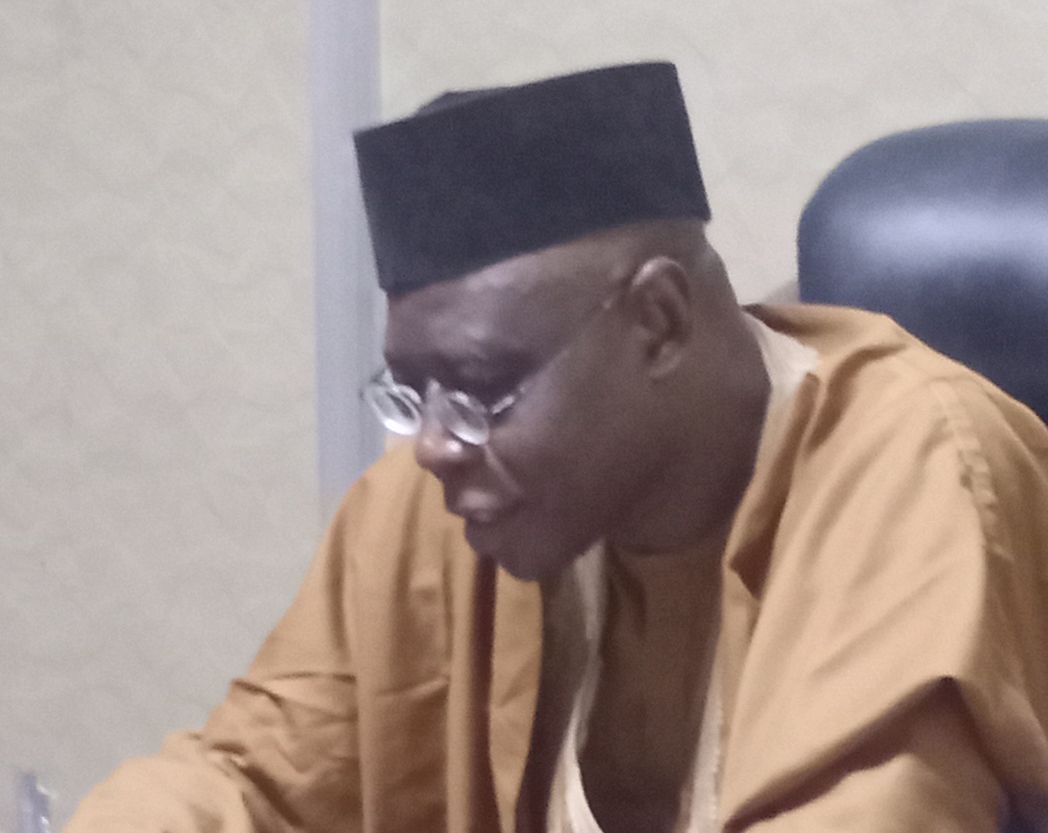
By Tijjani Sarki, Public Policy Analyst and Good Governance Advocate
A trained health worker can be the difference between life and death. A midwife can help a mother survive childbirth, protect a newborn and bring reassurance to a family at its most vulnerable moment. That is why I believe every trained health worker deserves more than appreciation after graduation; they deserve a meaningful opportunity to practise their profession with dignity.
I therefore received the recent gesture by Hon. Mahmoud Tajo Sani Gaya and ALGON Kano State towards the 44 graduating Community Midwives of Nafisatu College of Nursing Sciences, Kwankwaso, with mixed feelings.
I commend Hon. Gaya for representing the 44 local government chairmen, for announcing the ₦1 million support to the institution and graduates, and particularly for expressing willingness to facilitate opportunities for the graduates while efforts are made towards permanent employment. These are commendable steps.
But I believe we should go further.
My concern is not with ALGON’s gesture. My concern is with a situation that has gradually become too familiar: many of our trained nurses, midwives and other health professionals spend years working as casual or temporary staff in public and private health facilities, sometimes with irregular or no pay.
This is where my plea begins. How can we continue to train health workers, acknowledge the shortage of personnel in our health facilities, and then leave qualified graduates struggling for years to secure stable employment?
The World Health Organization has repeatedly emphasised the importance of having an adequate, properly distributed and supported health workforce for effective healthcare delivery. Nigeria continues to face significant health-workforce shortages and uneven distribution of health professionals.
For me, this should not only be viewed as an employment issue. It is a healthcare issue. It is a human-capital issue. It is a community-development issue.
Every nurse or midwife who remains unemployed or trapped in years of casual employment represents skills that our communities are not fully benefiting from.
I therefore respectfully appeal to ALGON and the relevant authorities to consider using this opportunity to begin a broader conversation on bridging the manpower deficit in the health sector through the proper absorption of qualified nurses, midwives and other health workers into permanent and pensionable employment, subject to professional and establishment requirements.
The 44 graduates should not be the end of the conversation. They should be the beginning.
If there are vacancies and genuine manpower gaps in our primary healthcare centres, hospitals and other health facilities, let us identify them. Let us match qualified health workers with those gaps. Let us deploy them where they are most needed, particularly in underserved rural communities.
I recognise that permanent employment has financial and administrative implications. But I also believe we must count the cost of not employing these professionals.
What is the cost of losing a mother because skilled personnel were unavailable? What is the cost of a newborn denied timely care? What is the cost of allowing trained young professionals to lose hope after years of education and training?
These are questions we cannot answer with casual appointments alone.
Hon. Gaya’s statement that “The knowledge they acquired must benefit the community” resonates deeply with me.
Yes, their knowledge must benefit the community. But if we truly want that knowledge to benefit Kano, we must give the people who possess it the stability, dignity and professional security required to serve effectively.
ALGON has taken a commendable first step. My humble plea is that it should take the next one, let us move from casual engagement to a credible pathway for permanent and pensionable employment for qualified health workers.
Our health workers are not casual assets. They are the human capital upon which the health and survival of our communities depend.
Tijjani Sarki,
Public Policy Analyst and Good Governance Advocate
Can be resched via responsivecitizensinitiative@gmail.com
15th September,2026

